How to Prepare Your Home's Exterior for a Thunderstorm
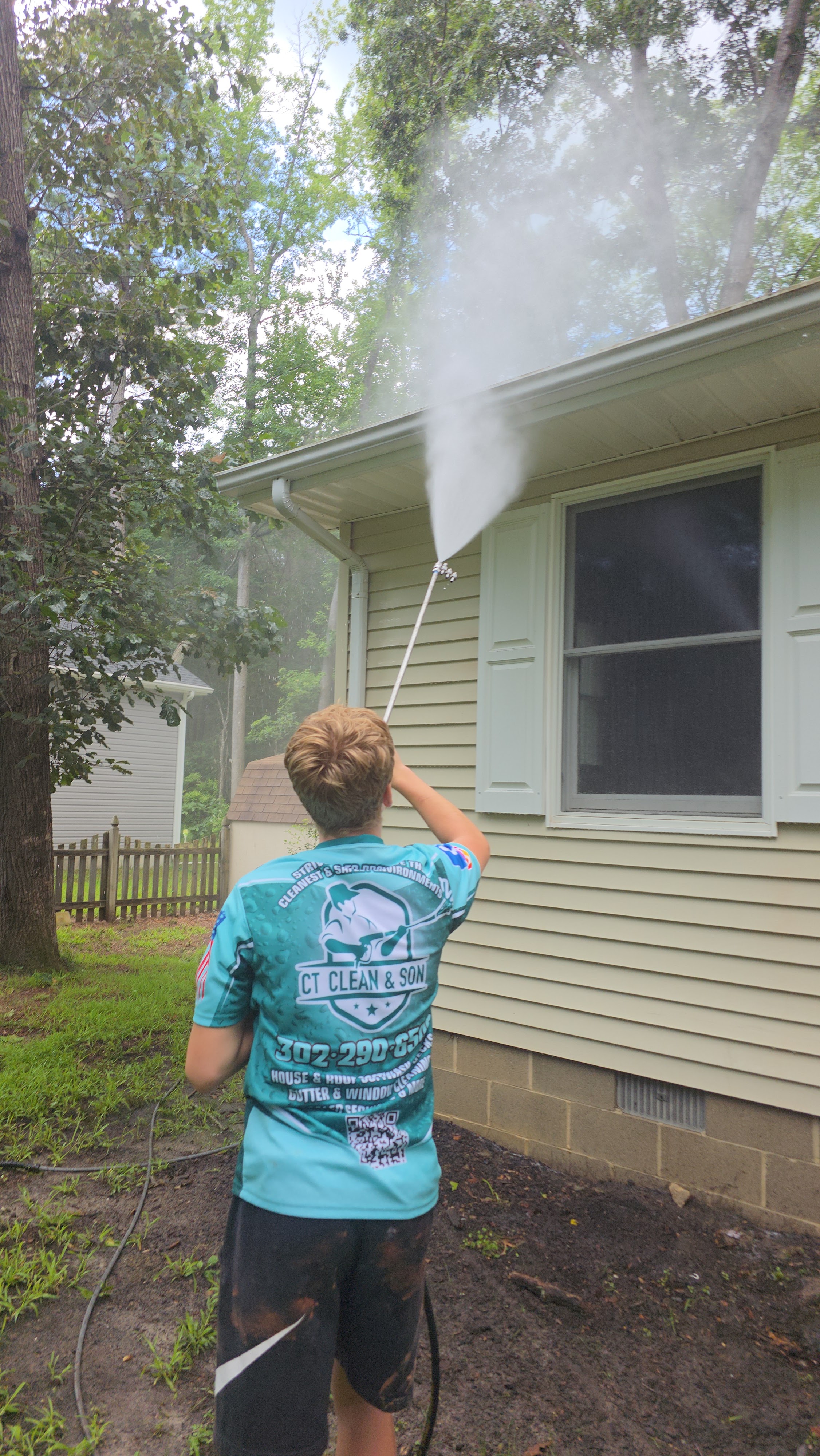
Summer thunderstorms in Delaware don't give you much warning. One minute it's 90 and humid, the next you've got an inch of rain coming down sideways with 50 mph gusts behind it. The good news is that most storm damage to a home's exterior is preventable, and the prep work takes an afternoon at most. Here's what to walk through before the next one rolls in, including a few things most homeowners never think about.
Start with your gutters
Your gutters are your home's first line of defense in heavy rain. When they're clogged with leaves, shingle grit, or a bird's nest, water has nowhere to go but over the edge — straight down your siding and into the soil against your foundation. Before a storm, check that gutters are clear and that downspouts actually drain. Run a hose through them if you're not sure. If it's been more than a year since they were cleaned, or you'd rather not get on a ladder before a storm, gutter cleaning is one of the most affordable services we offer at CT Clean and Son, and it pays for itself the first time water goes where it's supposed to.
Downspouts should carry water at least four to six feet from the foundation, so make sure extensions are attached and pointed downhill, not popped off in the yard from the last mow. A lot of basement flooding isn't from the storm itself — it's from clogged drainage that had all summer to build up.
Wind does more damage than rain
In most thunderstorms, wind is the real threat. Anything in your yard under about 20 pounds can become a projectile in a strong gust: patio umbrellas, lightweight chairs, kids' toys, potted plants, bird feeders, garden flags, trash cans. Close the umbrellas and move the small stuff into the garage or shed.
The bigger items are the ones people get wrong. Trampolines are famous for taking flight — if you can't disassemble it, anchor it to the ground or tie it off to something solid on all sides. Storage sheds should be anchored too, not just sitting on blocks.
And here's the one almost nobody knows: your grill can go in the garage during a storm, but the propane tank cannot. Propane should never be stored in a garage, basement, or any enclosed space — a small leak plus a spark is all it takes. Disconnect the tank, leave it outside in the open, and secure it upright so wind can't tip it. Tie it to a post or set it against something solid.
If hail is in the forecast
Delaware doesn't get Texas-sized hail often, but even pea-sized stones with wind behind them can crack windows and dent siding. Get vehicles into the garage or under cover. Close your blinds and drapes — not for privacy, but so that if a window does break, the glass gets caught instead of flying across the room. And leave anything you forgot outside where it is once the storm starts. A dented grill lid is a lot cheaper than a trip to the ER.
Check your openings
Doors and windows take the worst of the wind, so look for loose hinges, missing bolts, and frames that rattle. Your garage door deserves special attention — it's the largest and usually weakest opening on the house, and if wind gets in there, it pressurizes the whole structure. Make sure it closes fully and seals at the bottom.
While you're walking the perimeter, give the siding and roofline a once-over. Loose panels, lifted shingles, and sagging soffits get worse fast in high wind, and flashing that's already loose gives wind-driven rain a way in. This stuff is easier to spot on a clean house — grime and algae hide hairline cracks and soft spots. It's one of the side benefits customers mention after a house wash: once the buildup is gone, you can actually see the condition of your siding.
The five-minute insurance move
Before the storm, walk around your house and take photos of the exterior with your phone — roof, siding, gutters, deck, fence. If the storm does damage, you now have dated before-and-after pictures, which makes an insurance claim dramatically smoother. Most homeowners skip this and end up arguing about what condition things were in.
A few last things: trim any dead or overhanging branches, especially ones over the roof, power lines, or your AC unit — falling limbs are the number one cause of storm damage to condensers. Test your sump pump by pouring a bucket of water into the pit and confirming it kicks on. And never run a generator or grill inside the garage during an outage, even with the door open. Carbon monoxide doesn't care that it's raining.
After the storm
Do the walk-around in reverse. Check gutters for new debris and look for shingles or siding pieces in the yard. Here's a pro tip for spotting hail damage: check the soft metal first. Dented gutters, downspouts, window screens, or aluminum roof vents mean the hail hit hard enough to damage your shingles too, even if the roof looks fine from the ground. That's your cue to get a roof inspection before the next storm finds the weak spot for you.
Storms also drive organic material into siding, and that's often where new mold and algae growth starts. If your home came out of the storm looking rough, our soft washing process removes that growth at the root without blasting your siding with high pressure.
Storm prep isn't complicated, it's just easy to put off. An afternoon of checking gutters, securing the yard, and walking the perimeter beats a week of dealing with water in the basement. And if you'd rather have a professional set of eyes on your gutters and exterior before storm season gets going, reach out to us for a free evaluation — we serve New Castle County and Southern PA, and we'll tell you honestly what needs attention and what doesn't.
Need professional exterior cleaning?
Let CT Clean and Son restore the brilliance of your property safely and effectively.
Get Your Free Estimate